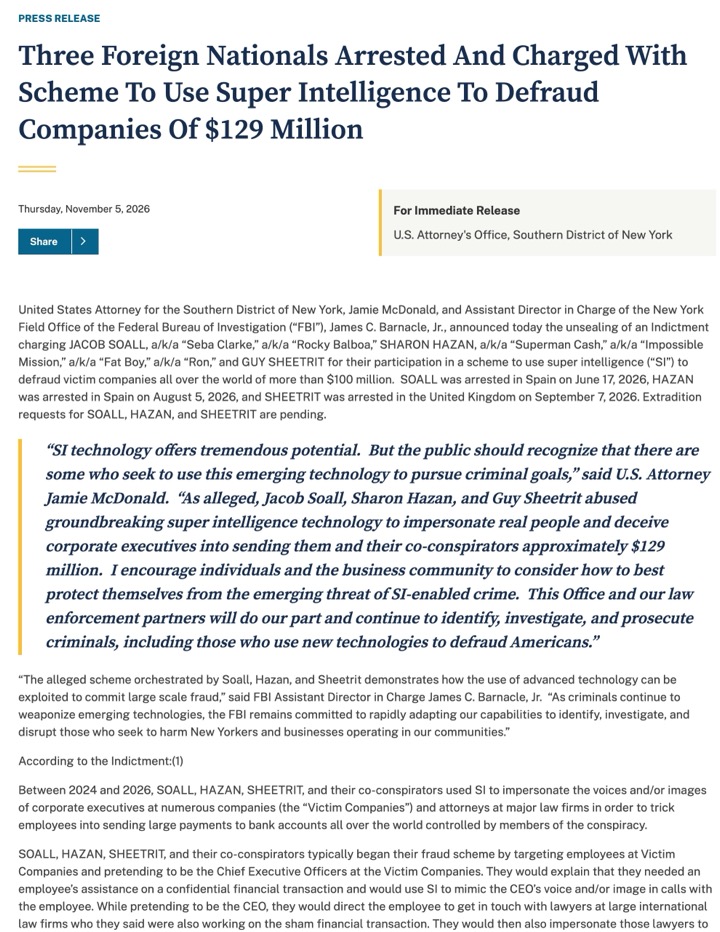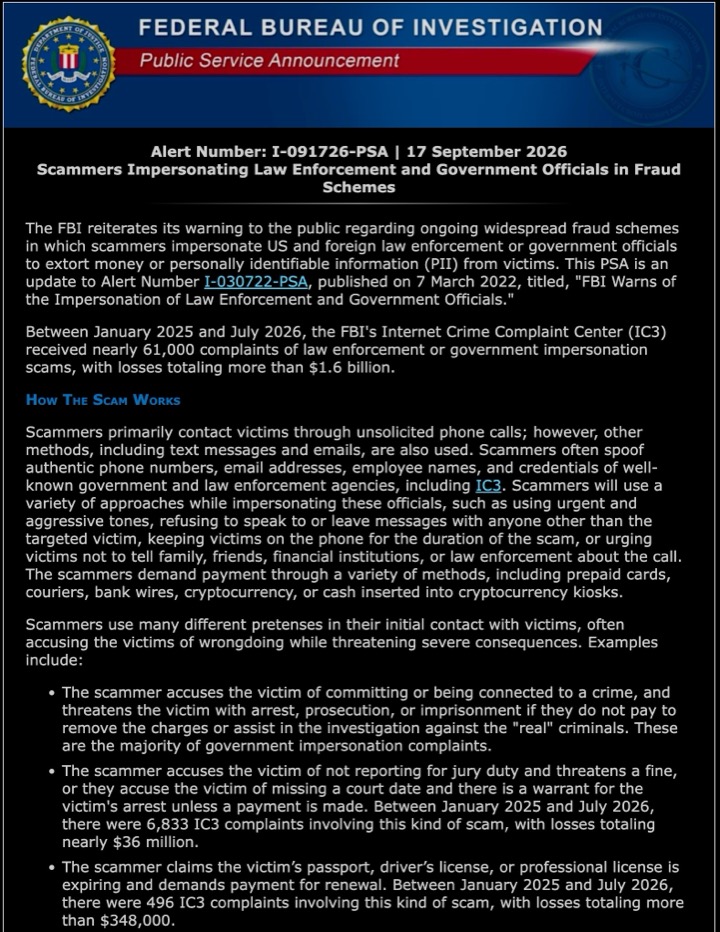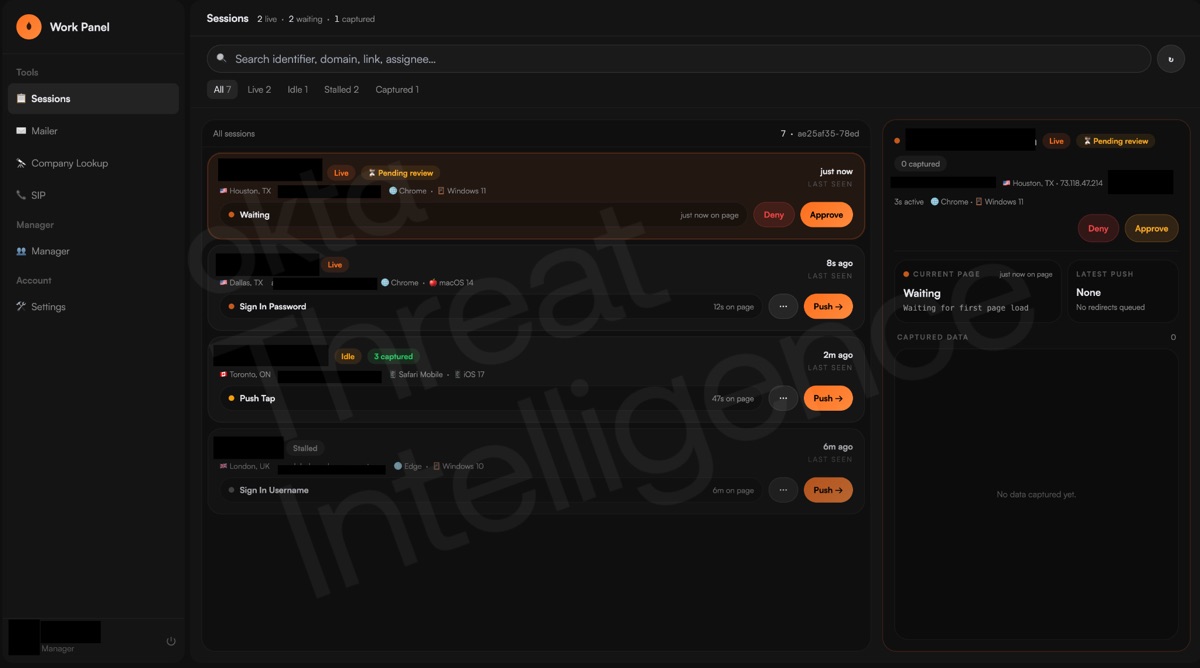
- The FBI warns that scammers use AI tools to generate highly realistic voices impersonating candidates, campaigns, government entities, and trusted contacts.
- Under FCC rules, a call using an AI-generated voice is an artificial-voice robocall and needs the recipient's prior consent. Consumers can sue for $500 to $1,500 per call.
- Carriers are not bystanders: the provider that signed the 2024 AI deepfake election robocalls agreed to a $1,000,000 penalty.
- Election Day is November 3, 2026. Scam call volumes follow the news cycle, and so does enforcement attention.
What the FBI warned
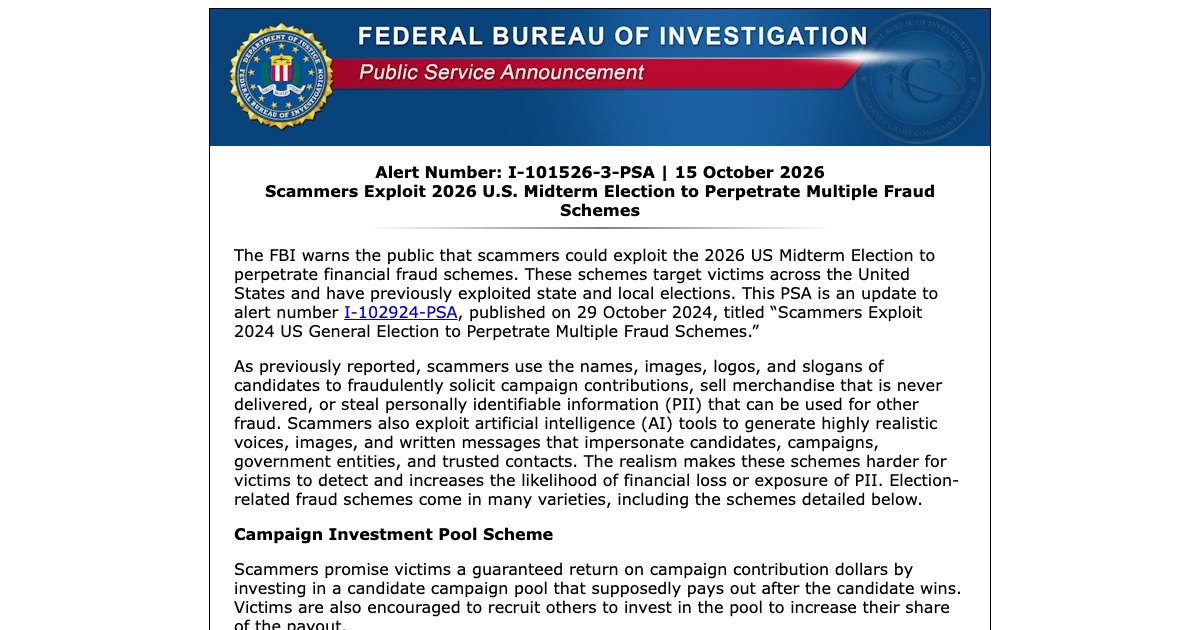
On October 15, 2026, the FBI issued a public service announcement warning that scammers could exploit the 2026 midterm elections. The alert updates the FBI’s warning before the 2024 general election and describes four schemes: fake “investment pools” that promise returns on campaign contributions, sham political action committees that keep donors’ money, political merchandise that is never delivered, and texts or emails claiming the recipient is not registered to vote, which lead to fake registration pages built to steal personal information.
The alert also describes the tool that makes these schemes convincing. Scammers “exploit artificial intelligence (AI) tools to generate highly realistic voices, images, and written messages that impersonate candidates, campaigns, government entities, and trusted contacts.” The FBI says the realism makes the schemes harder to detect and increases the likelihood of loss.
What the alert asks of the public. Be cautious with unsolicited calls, texts, emails, and surveys; verify committees on fec.gov and voter registration on vote.gov; and report fraud to IC3 or a local FBI field office.
Why carriers should pay attention
An AI voice that impersonates a candidate or an election official reaches voters as a phone call, and every call enters the network through an originating provider and passes through others. The rules on those calls are already settled:
- AI voices are artificial voices. Since February 2024, the FCC has treated AI-generated voices as “artificial” under the TCPA, so these calls require prior express consent.
- Providers must know their customers and upstream providers. The obligations behind the Robocall Mitigation Database apply to political seasons like any other.
- Attestation is a statement of knowledge. Signing a call with A-level attestation tells the network the provider knows the caller and its right to use the number.
The precedent. In January 2024, voters in New Hampshire received AI deepfake robocalls imitating the President’s voice. Lingo Telecom had signed 3,978 of the calls with A-level attestation, relying on its customer’s certification, and agreed to a $1,000,000 civil penalty. Separately, consumers can sue for $500 per unlawful call, up to $1,500 if the violation is willful or knowing.
The broader shift to automated voices is covered in our analysis of AI voice agents in scam calls.
Questions to answer now
Carrier and voice-provider leaders should be able to answer the following with confidence before Election Day:
| # | Question for your leadership team | When |
|---|---|---|
| 1 | Which customers on our network place political or advocacy calls, and how were they verified? | Now |
| 2 | What evidence stands behind each A-level attestation we give that traffic? | Now |
| 3 | Would we notice a sudden surge of prerecorded or AI-voiced calls from one customer or upstream provider? | Before Nov 3 |
| 4 | Could we answer a traceback request about an election scam call within 24 hours? | Before Nov 3 |
Answering these questions takes visibility into who is behind your traffic. The VoiceAlerts team can review where you stand in a free 30-minute briefing.
Key dates
| Date | Milestone |
|---|---|
| Jan 21, 2024 | AI deepfake robocalls reach New Hampshire primary voters. |
| Feb 8, 2024 | FCC confirms that AI-generated voices are “artificial” under the TCPA. |
| Aug 21, 2024 | Lingo Telecom agrees to a $1,000,000 civil penalty. |
| Oct 15, 2026 | FBI warns of midterm election scams using AI-generated voices. |
| Nov 3, 2026 | Election Day. |
How VoiceAlerts helps
VoiceAlerts verifies who originates your traffic and who hands it to you (KYC and KYUP), keeps STIR/SHAKEN attestation honest, and captures the scam calls that use your network or your brand, with an audit trail regulators accept.
- Know Your Customer and Know Your Upstream Provider evidence
- STIR/SHAKEN attestation practices
- Live captures of impersonation calls crossing your network
Common questions
What did the FBI warn about the 2026 midterm elections?
In alert I-101526-3-PSA (October 15, 2026), the FBI warned that scammers use candidates' names, images, logos, and slogans to solicit fake contributions, sell merchandise that is never delivered, and steal personal information, and that they use AI tools to generate realistic voices, images, and messages impersonating candidates, campaigns, government entities, and trusted contacts.
Are robocalls with AI-generated voices legal?
The FCC confirmed in February 2024 (FCC 24-17) that AI-generated voices are "artificial" voices under the TCPA. Calls using them require the called party's prior express consent unless an emergency purpose or exemption applies.
Can a carrier be penalized for carrying AI voice robocalls?
Yes. In August 2024, Lingo Telecom agreed to a $1,000,000 civil penalty after it signed AI deepfake election robocalls with A-level STIR/SHAKEN attestation while relying on its customer's certification.
How can VoiceAlerts help carriers before an election?
VoiceAlerts verifies the customers and upstream providers behind a carrier's traffic (KYC and KYUP), reviews STIR/SHAKEN attestation practices, and captures impersonation calls crossing the network, so a carrier can act before a traceback request or enforcement inquiry arrives.
Sources
- ic3.govFBI IC3 Public Service Announcement I-101526-3-PSA: Scammers Exploit 2026 U.S. Midterm Election to Perpetrate Multiple Fraud SchemesOctober 15, 2026
- helpnetsecurity.comHelp Net Security: Scammers clone candidates' voices to steal cash and voter data ahead of 2026 midterms, FBI warnsOctober 16, 2026
- docs.fcc.govFCC 24-17: Implications of Artificial Intelligence Technologies on Protecting Consumers from Unwanted Robocalls and Robotexts, Declaratory RulingReleased February 8, 2024
- docs.fcc.govFCC Enforcement Bureau: Lingo Telecom, LLC, Order and Consent Decree (DA 24-790)August 21, 2024
- law.cornell.edu47 U.S.C. 227(b)(3): Telephone Consumer Protection Act, private right of action
This article is for general information and is not legal advice. Proposed rules can change before adoption; check the FCC record for the final text.