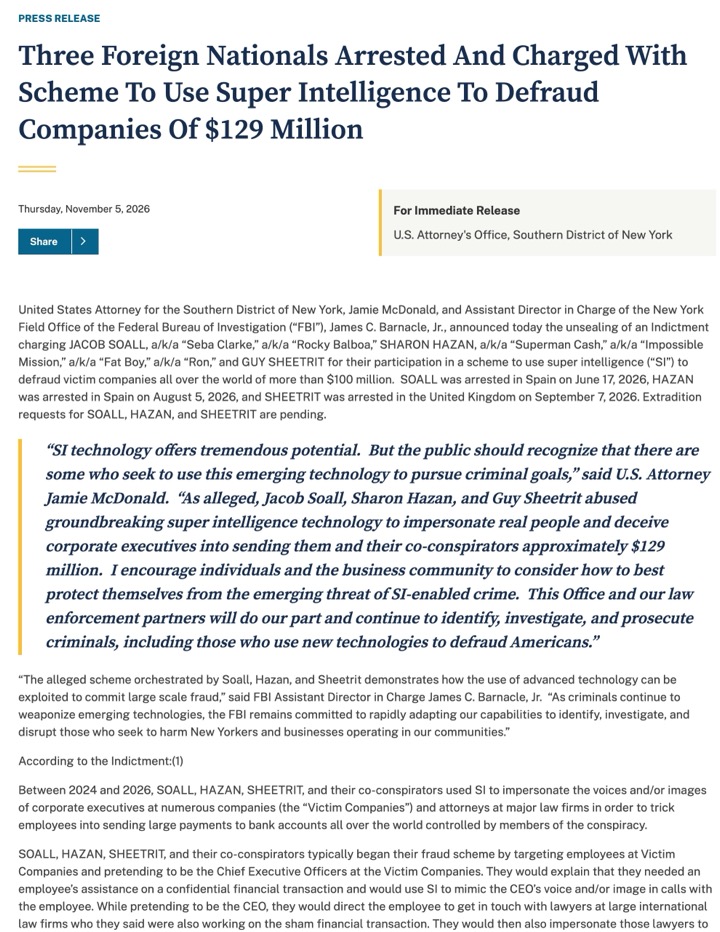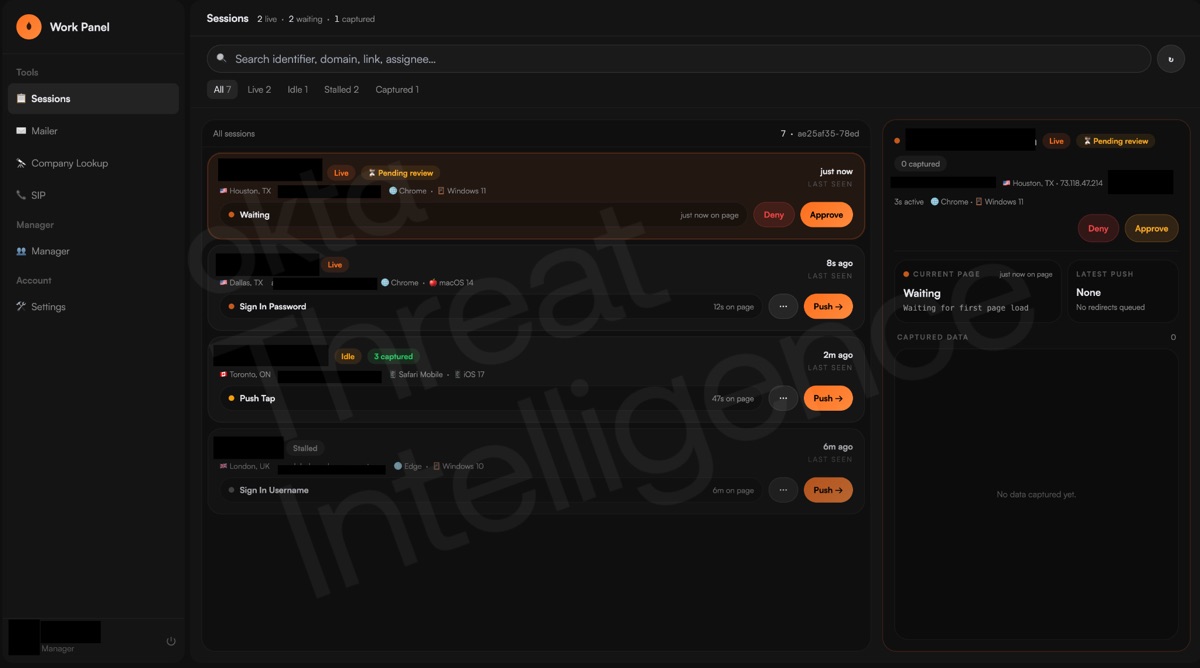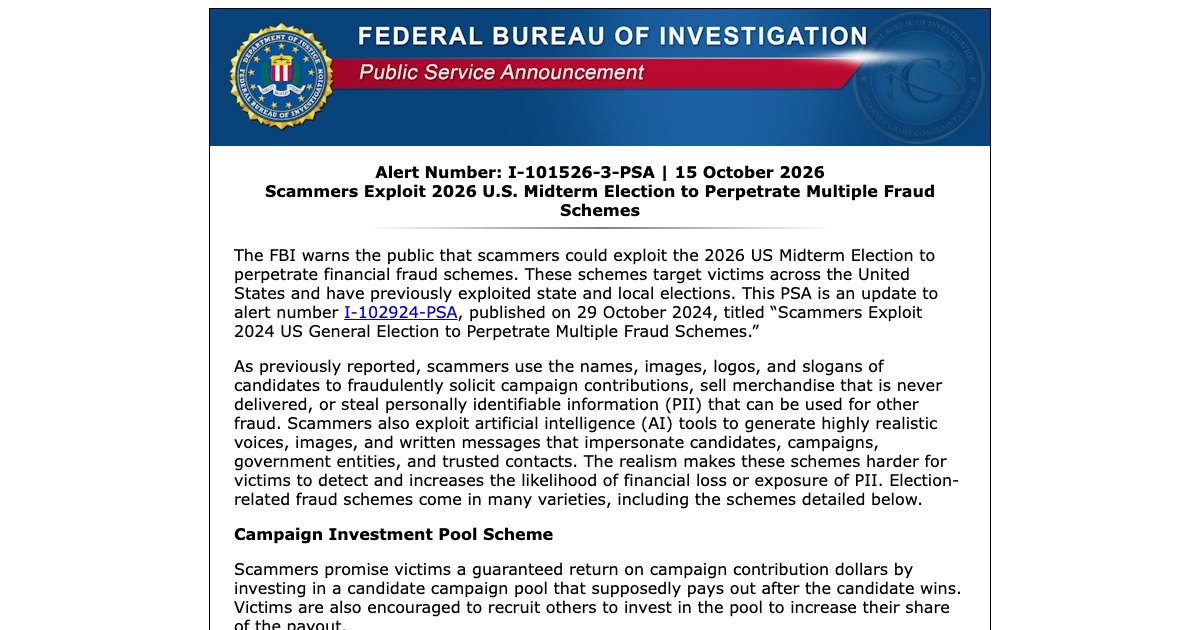
- The FBI received nearly 61,000 complaints of law-enforcement and government impersonation between January 2025 and July 2026, with losses of more than $1.6 billion.
- Scammers often spoof the authentic numbers of the agencies they imitate. In November, the FBI's Honolulu office warned that its own field-office numbers were being spoofed.
- New scripts keep the victim on the line: a fake FTC official threatens to deactivate the victim's phone number, then transfers the call to a fake police officer.
- Any organization whose number is trusted is a target. Knowing when that number appears in calls you did not make is the first defense.
What the FBI and the FTC are seeing
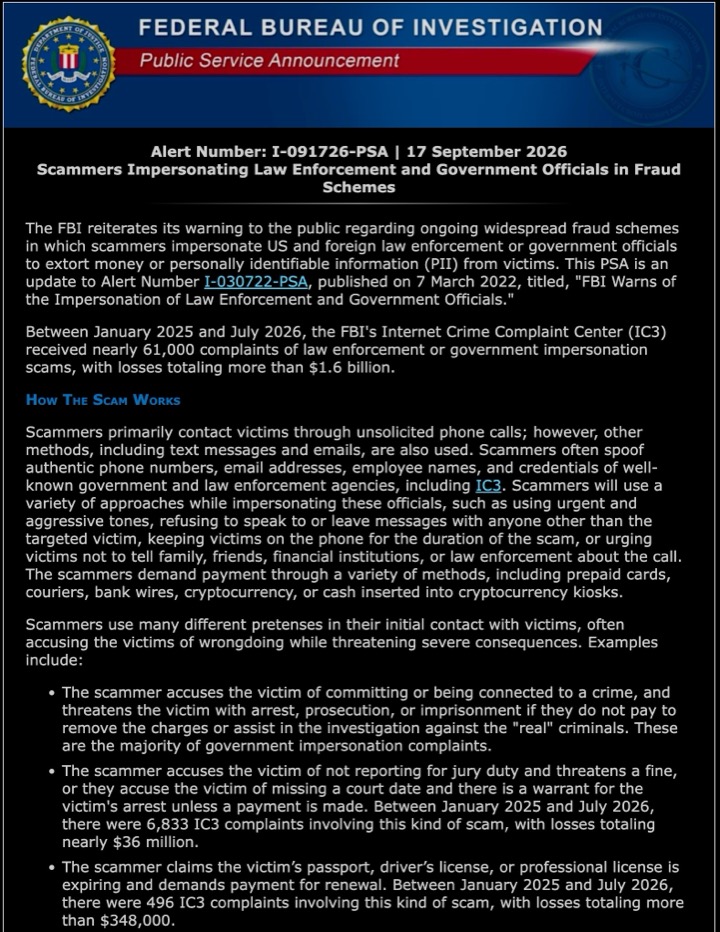
On September 17, 2026, the FBI’s Internet Crime Complaint Center (IC3) updated its warning on scammers who pose as law-enforcement and government officials. Between January 2025 and July 2026, IC3 received nearly 61,000 such complaints, with losses of more than $1.6 billion. The contact is primarily an unsolicited phone call, followed by text messages and email.
| Pretext reported to the FBI (Jan 2025 to Jul 2026) | Complaints | Losses |
|---|---|---|
| Foreign law enforcement or U.S.-based foreign diplomatic officials | 1,809 | More than $140 million |
| License threats against medical practitioners | 3,322 | More than $37 million |
| Missed jury duty or court date | 6,833 | Nearly $36 million |
| Expiring passport, driver’s license, or professional license | 496 | More than $348,000 |
Accusations of a crime, with threats of arrest or prosecution, make up the majority of complaints. Payment is demanded through prepaid cards, couriers, bank wires, cryptocurrency, or cash inserted into cryptocurrency kiosks. The FBI also reports that scammers use AI to appear as officials on video calls.
Two newer variants show how the scripts adapt:
- The fake FTC call (October 22). A caller posing as an FTC official reads out a fake badge ID and says a phone registered to the victim is being used for scams in another country. The caller threatens to deactivate the number and transfers the victim to a fake police officer. Victims who hesitate are told to look up the police number themselves, and the people who answer are part of the scam. The call ends with a demand for a “security deposit” to avoid arrest.
- Spoofed FBI field offices (November 2). The FBI’s Honolulu office warned that fraudsters are spoofing the official phone numbers of federal field offices and using the names of real and fictitious agents of the FBI, the DEA, and the Secret Service. In one complaint, the caller appeared on a video call in front of a fake federal-office backdrop.
Why the caller ID is part of the scam
The FBI says scammers “often spoof authentic phone numbers” and other credentials of the agencies they imitate. A spoofed number does two jobs. It gets the call answered, and it defeats the check a cautious person makes: the number on the screen matches the agency’s published number. Some victims who called the number back could not reach anyone and took the call as genuine.
The same technique is used against banks, retailers, and healthcare providers, as we described in our analysis of brand spoofing. Call authentication helps less than many expect: the FCC itself has cited data showing that a large share of illegal calls carry the highest attestation level.
The cost lands on the organization that is imitated. Every call made in an agency’s or a bank’s name teaches the public that its real number cannot be trusted. The real organization then pays twice: in complaints and call volume from victims, and in legitimate calls that go unanswered.
What organizations can do
- Know when your number is used. Monitor whether your published and inbound-only numbers appear in calls you did not make, and how often.
- Protect numbers that never call out. Numbers used only to receive calls can be registered so that carriers block calls claiming to come from them (a “do-not-originate” registration).
- Publish what you will never do. State plainly that you will never call to demand payment, threaten arrest, or ask for secrecy, as the FBI and the FTC now do.
- Give investigators evidence. Dates, times, numbers, and carriers involved make traceback and enforcement possible. A complaint without them rarely leads anywhere.
Questions to answer now
Leaders of any organization whose number is trusted by the public should be able to answer the following with confidence:
| # | Question for your leadership team | When |
|---|---|---|
| 1 | Would we know if our main or published numbers were being spoofed today? | Now |
| 2 | Which of our numbers never place outbound calls, and are they registered as do-not-originate? | Now |
| 3 | Do our website and our call-center scripts tell the public what we will never ask on a call? | This quarter |
| 4 | Could we give carriers and investigators the evidence they need to trace a spoofing campaign? | This quarter |
Answering these questions takes visibility into how your numbers are used across the network. The VoiceAlerts team can show you in a free voice-channel threat briefing.
Key dates
| Date | Milestone |
|---|---|
| Jan 2025 to Jul 2026 | Nearly 61,000 complaints and more than $1.6 billion in losses reported to the FBI. |
| Jul 2026 | FBI warns of scammers impersonating IC3 staff to re-target fraud victims. |
| Sep 17, 2026 | FBI updates its public service announcement on government impersonation (I-091726-PSA). |
| Oct 22, 2026 | FTC warns of fake FTC officials threatening to deactivate phone numbers. |
| Nov 2, 2026 | FBI Honolulu warns that federal field-office numbers are being spoofed. |
How VoiceAlerts helps
VoiceAlerts monitors how your numbers and name are used across the U.S. voice network and alerts you when they appear in calls you did not make, with the evidence carriers and investigators need to act.
- Spoofing of your published and inbound-only numbers
- Call patterns that signal an impersonation campaign
- Evidence for carriers, traceback, and law enforcement
Common questions
How much do government impersonation scams cost?
The FBI's Internet Crime Complaint Center received nearly 61,000 complaints of law-enforcement or government impersonation scams between January 2025 and July 2026, with losses totaling more than $1.6 billion.
Can a call showing a real government phone number be fake?
Yes. The FBI says scammers often spoof the authentic phone numbers of well-known government and law-enforcement agencies, and its Honolulu field office warned in November 2026 that its own office numbers were being spoofed. The FBI advises hanging up and calling the agency back at a publicly listed number.
Does the FTC call people to deactivate their phone numbers?
No. In an October 22, 2026 consumer alert, the FTC warned that callers posing as its staff claim a victim's phone is being used for scams abroad, threaten to deactivate the number, and transfer the call to a fake police officer who demands a security deposit. A real FTC employee will never threaten to disconnect a phone or ask for money.
How can VoiceAlerts help organizations whose numbers are spoofed?
VoiceAlerts monitors how an organization's numbers and name are used across the U.S. voice network, alerts it when they appear in calls it did not make, and provides the evidence carriers, traceback, and investigators need to act.
Sources
- ic3.govFBI Internet Crime Complaint Center: Scammers Impersonating Law Enforcement and Government Officials in Fraud Schemes (I-091726-PSA)September 17, 2026
- consumer.ftc.govFTC Consumer Alert: The FTC is not calling to deactivate your phone numberOctober 22, 2026
- fbi.govFBI: FBI warns of scammers impersonating the IC3July 2026
- staradvertiser.comHonolulu Star-Advertiser: FBI warns Hawaii residents of scams invoking federal authoritiesFBI Honolulu warning, November 2, 2026
This article is for general information and is not legal advice. Proposed rules can change before adoption; check the FCC record for the final text.