- Every holder of a VoIP numbering authorization would have to certify that it is not tied to the FCC's Covered List, does not use covered equipment, and has no national-security-related Section 214 history.
- Existing holders would have 30 days to file once the paperwork receives final approval. Providers that fail to comply can be barred from obtaining new numbers.
- A further notice previews tougher vetting: a physical business address, five years of ownership history, and responsibility for affiliates that use your numbers.
- Providers that obtain numbers through a carrier partner are not directly covered, but should expect their upstream provider to ask for the same information.
What the FCC will decide
At its November 19 open meeting, the Commission will vote on a Fourth Report and Order and Fourth Further Notice of Proposed Rulemaking in its numbering proceeding (WC Docket Nos. 13-97, 07-243, and 20-67), listed on the agenda as “Securing Phone Numbers Against National Security Threats.” Chairman Brendan Carr describes the item as strengthening the “first line of defense” against bad actors: the vetting a provider must pass before it can obtain U.S. telephone numbers.
The item targets the VoIP numbering authorization, the route created in 2015 that allows interconnected VoIP providers to obtain numbers directly from the North American Numbering Plan Administrator rather than through a carrier partner. Press coverage has framed the vote as cutting China Mobile, China Telecom, and China Unicom off from U.S. numbers. The draft itself applies to any provider connected to the FCC’s Covered List, which has included the U.S. units of all three companies since 2022.
This is a draft. The FCC released it on October 29 for transparency, and the text can change before or at the vote. We will update this article after November 19.
Who is exposed
- Holders of a VoIP numbering authorization, and pending applicants. The order applies to both. This is the group with a filing obligation.
- Providers that obtain numbers through a carrier partner. Not directly covered. The further notice would make authorization holders responsible for affiliates that use their numbers, so upstream partners will push the diligence downstream.
- Enterprises and contact centers. Not regulated by this item. The risk is continuity: numbers sourced from a provider that loses access to new numbers may become difficult to grow or replace.
What the order would require
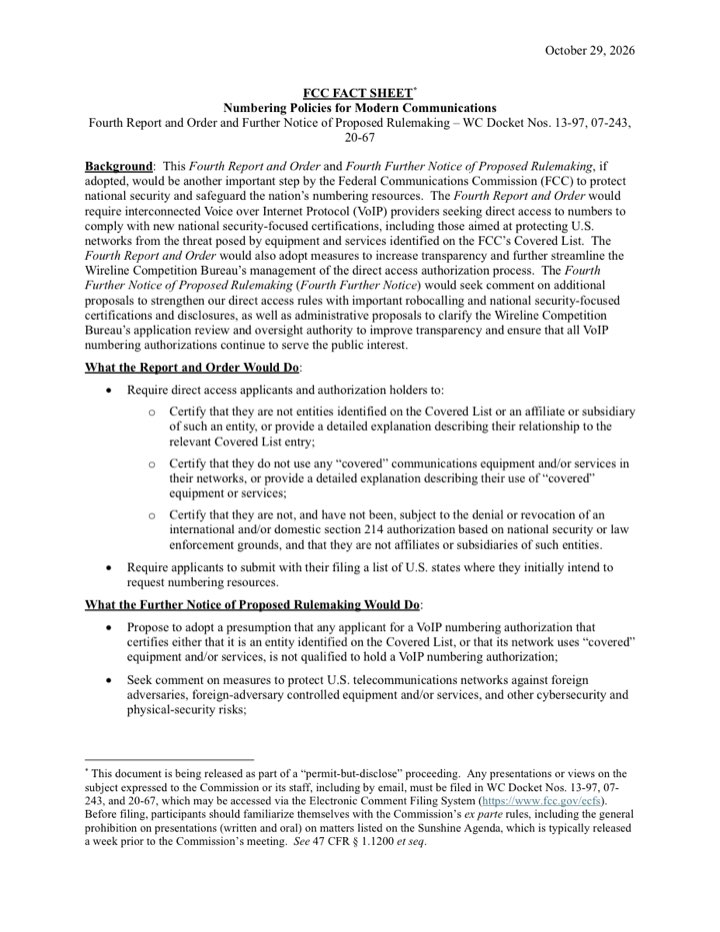
Applicants and existing authorization holders would certify that they:
- Are not on the Covered List and are not an affiliate or subsidiary of an entity on it, or explain the relationship in detail.
- Do not use covered equipment or services in their networks, or describe that use in detail.
- Have never had a Section 214 authorization denied or revoked on national-security or law-enforcement grounds, and are not affiliated with an entity that has.
New applicants would also list the states in which they initially intend to request numbers.
Deadline. Existing holders and pending applicants would have 30 days from the Wireline Competition Bureau’s announcement that the Office of Management and Budget has approved the new filing requirements. Later changes must be reported within 30 days, as today.
What non-compliance costs. The Commission can revoke the authorization, and the Wireline Competition and Enforcement Bureaus can direct the numbering administrator to deny the provider’s requests for new numbers. A provider that cannot obtain numbers cannot onboard new customers or replace numbers that have been flagged.
What the FCC is proposing next
The further notice seeks comment on a broader second phase. None of it applies until a later order.
- Presumptive disqualification for any applicant tied to the Covered List, or whose senior officials are owned or directed by a foreign adversary, rebuttable only by clear and convincing evidence.
- A bona fide business address. Virtual offices, co-working spaces, mailbox services, and registered agents would not qualify.
- Five years of corporate history, including ownership, control, name, and leadership changes.
- A business-model narrative explaining how the numbers will be used.
- A complete list of affiliates that are wholesale customers, with the authorization holder accountable for their compliance.
- Periodic recertification or renewal of authorizations.
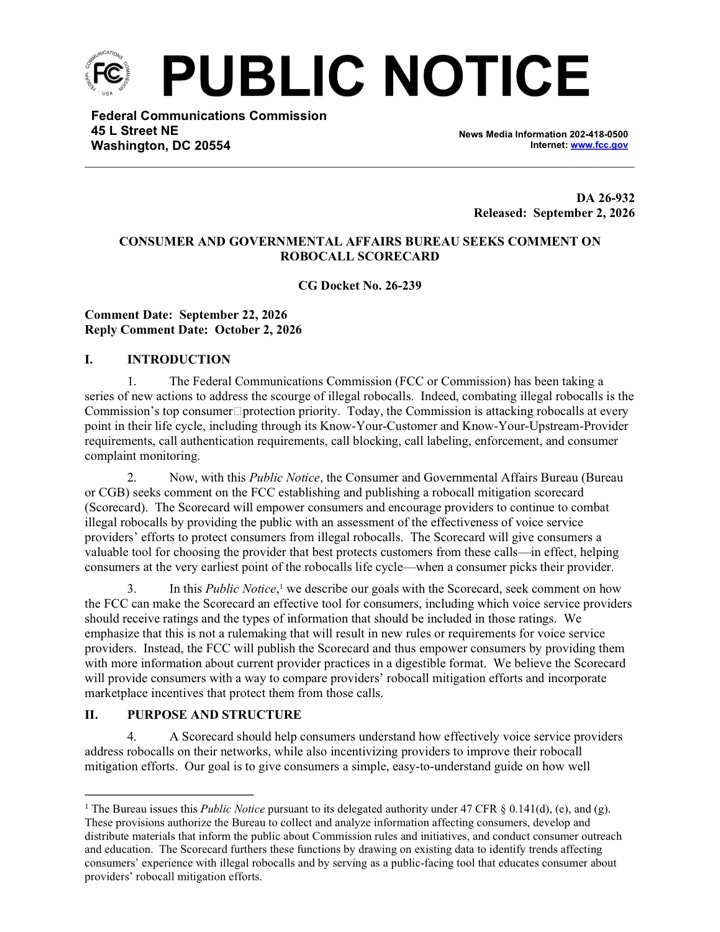
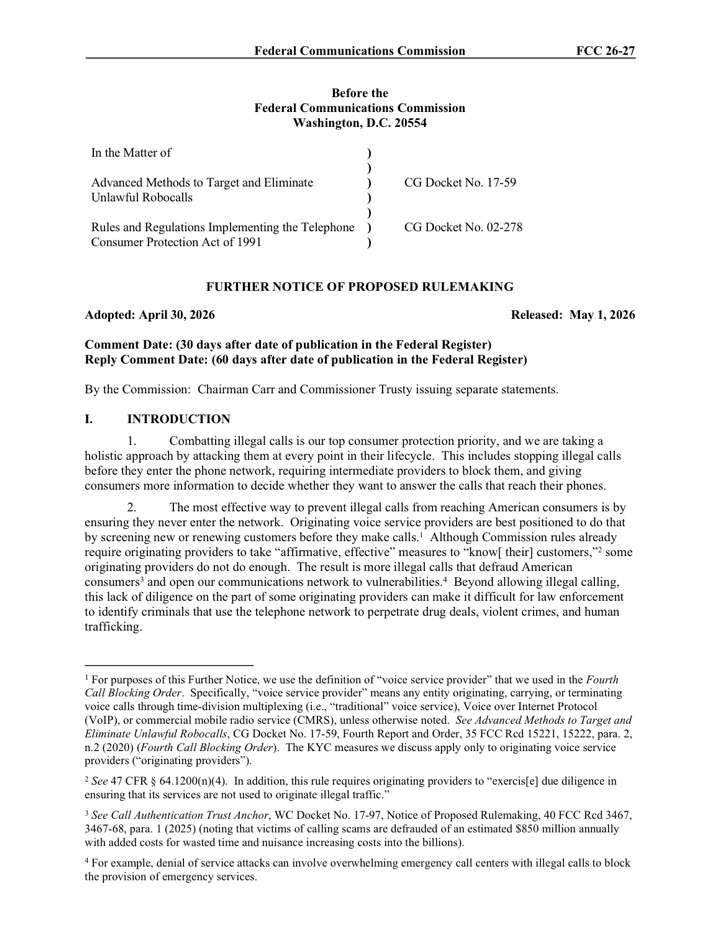
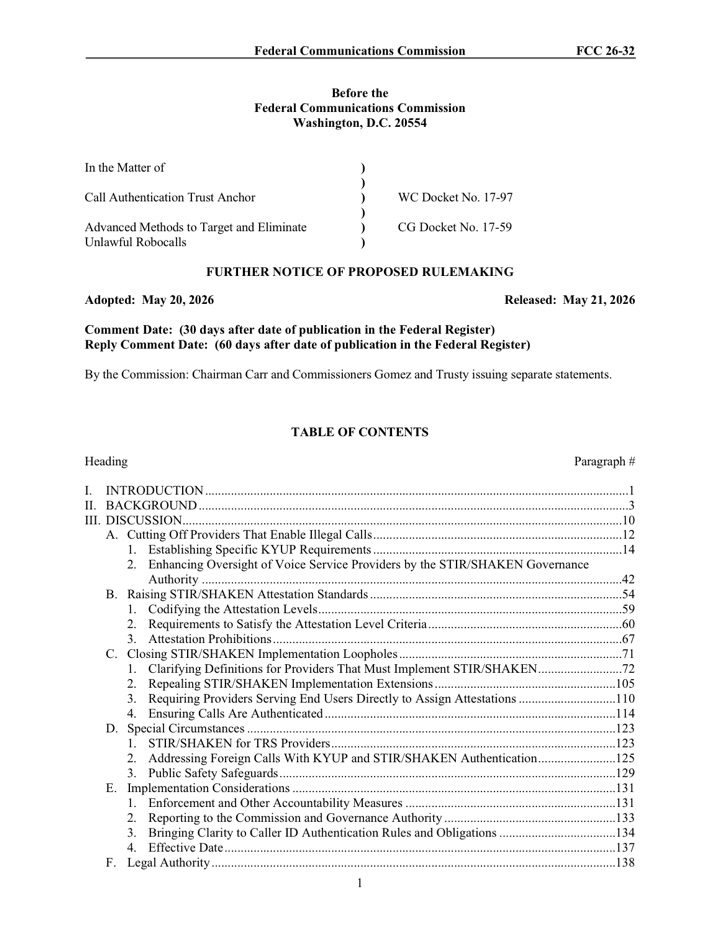
The direction is consistent across the FCC’s 2026 agenda: providers are expected to document who their customers and partners are before numbers are assigned and before traffic is accepted. The same principle drives the Commission’s tightening of the Robocall Mitigation Database, covered in our analysis of the latest RMD removals.
Questions to answer now
Before the vote, leadership should be able to answer the following with confidence:
| # | Question for your leadership team | When |
|---|---|---|
| 1 | Which entities in our corporate family hold a VoIP numbering authorization, or depend on a provider that does? | Now |
| 2 | Could we sign every proposed certification today, including on behalf of our vendors and affiliates? | Before Nov 19 |
| 3 | Would our business address, ownership history, and affiliate records withstand the vetting the FCC is proposing? | This quarter |
| 4 | Are we prepared to file within 30 days of final approval? | After the vote |
Answering these questions accurately takes a review of your network, vendors, and corporate records. The VoiceAlerts Compliance Team can tell you where you stand, and what to prioritize, in a free 30-minute briefing.
Key dates
| Date | Milestone |
|---|---|
| Oct 29, 2026 | FCC releases the fact sheet and public draft. |
| Nov 19, 2026 | Commission vote at the November open meeting. |
| After the vote | Federal Register publication sets comment dates on the further notice. |
| OMB approval + 30 days | Existing holders and pending applicants file the new certifications. |
How VoiceAlerts helps
VoiceAlerts verifies who originates your traffic and who hands it to you (KYC and KYUP), keeps STIR/SHAKEN tokens healthy, and maintains the audit trail regulators ask for, so a new certification becomes a filing, not a fire drill.
- Your KYC and Know Your Upstream Provider (KYUP) evidence
- STIR/SHAKEN token and attestation health
- Reassigned Number Database and TCPA safe-harbor records
Common questions
What is the FCC voting on November 19, 2026?
A Fourth Report and Order and Further Notice of Proposed Rulemaking in its numbering proceeding, listed as "Securing Phone Numbers Against National Security Threats." It adds national-security certifications for interconnected VoIP providers that obtain numbers directly from the numbering administrator.
What would VoIP numbering authorization holders have to certify?
That they are not on, or affiliated with an entity on, the FCC's Covered List; that they do not use covered equipment or services; and that they have never had a Section 214 authorization denied or revoked on national-security or law-enforcement grounds.
When would existing authorization holders have to comply?
Within 30 days after the Wireline Competition Bureau announces that the Office of Management and Budget has approved the new filing requirements. The text is a draft and can change before the vote.
How can VoiceAlerts help VoIP providers prepare?
VoiceAlerts verifies the customers and upstream providers behind a provider's traffic (KYC and KYUP), keeps STIR/SHAKEN tokens healthy, and maintains the audit trail regulators ask for, so new certifications rest on documented evidence.
Sources
- docs.fcc.govFCC Fact Sheet and public draft: Numbering Policies for Modern Communications, Fourth Report and Order and Fourth Further Notice of Proposed Rulemaking (FCC-CIRC2611-03)Released October 29, 2026
- fcc.govFCC: Tentative agenda for the November 2026 Open Meeting
- fcc.govFCC Covered List
- usnews.comReuters, via U.S. News: US plans to ban Chinese telecom firms from direct access to US phone numbersOctober 29, 2026
- federalregister.govFederal Register: Numbering Policies for Modern Communications (FCC 25-86), effective March 19, 2026
- docs.fcc.govFCC 26-17: Combatting Illegal Robocalls Through FCC Numbering Policies, Notice of Proposed RulemakingAdopted March 26, 2026
This article is for general information and is not legal advice. Proposed rules can change before adoption; check the FCC record for the final text.