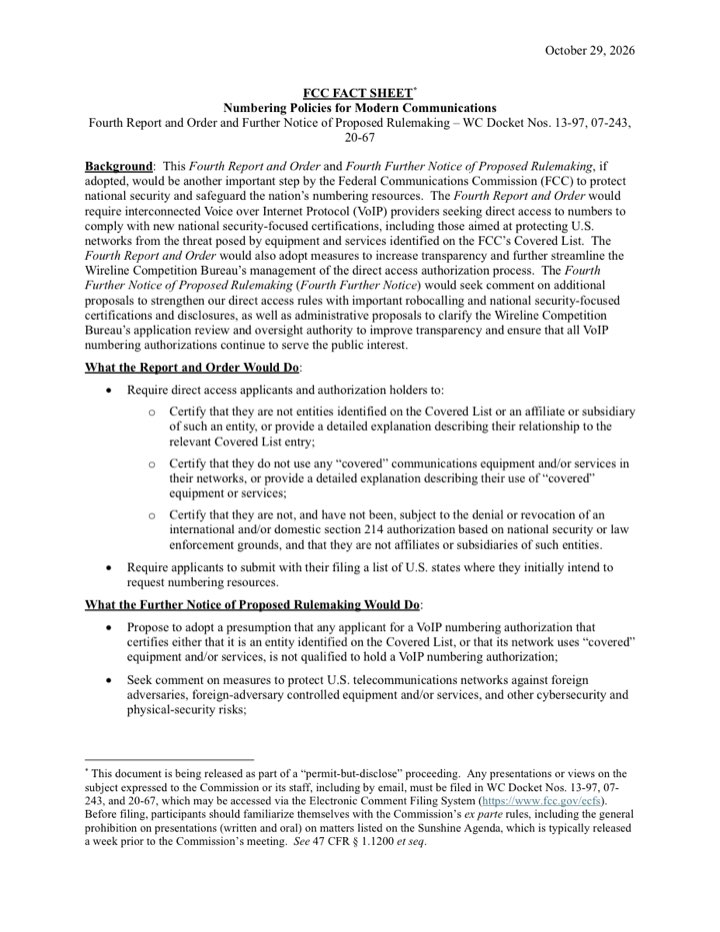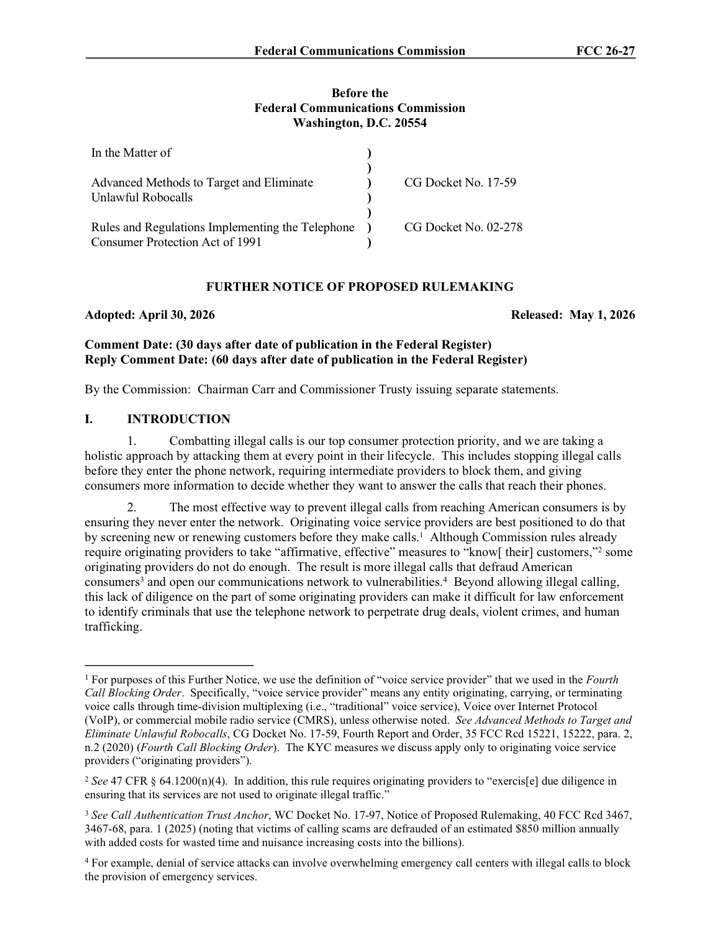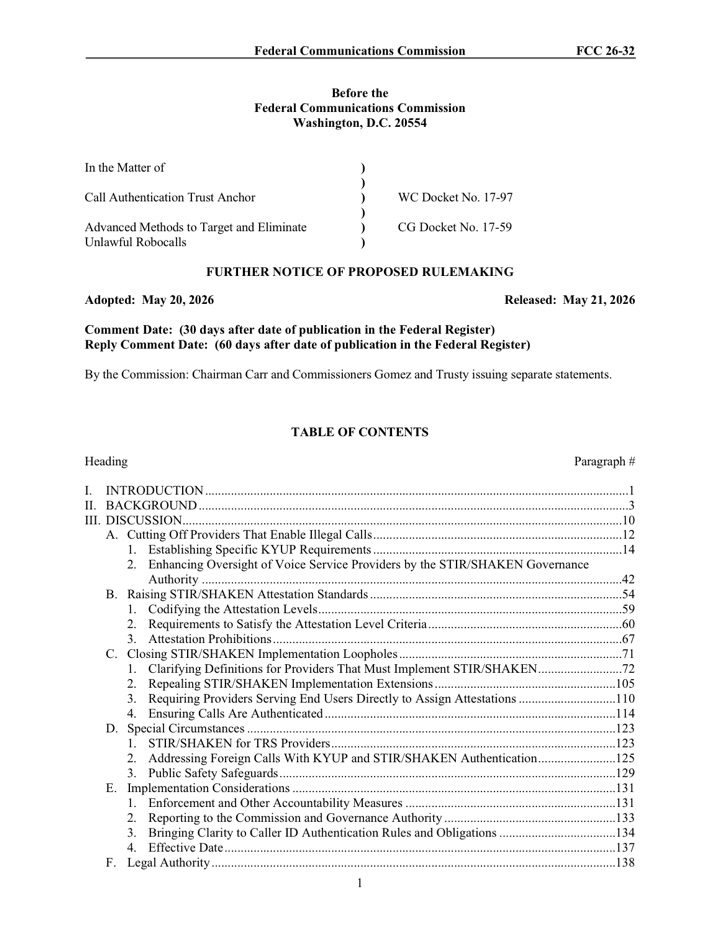
- The FCC proposes to rate domestic voice providers with retail customers on how well they protect consumers from illegal robocalls, in a scorecard published on its website.
- It would combine conduct, such as traceback responses and call authentication, with outcomes, such as complaints and how often legitimate calls are wrongly blocked.
- Grading ideas include risk tiers, scores out of 100, and letter grades from A to F. Comments closed October 2, 2026.
- The FCC stresses that the scorecard creates no new rules and is not a compliance finding. Its purpose is to help customers choose a provider.
What the FCC is building
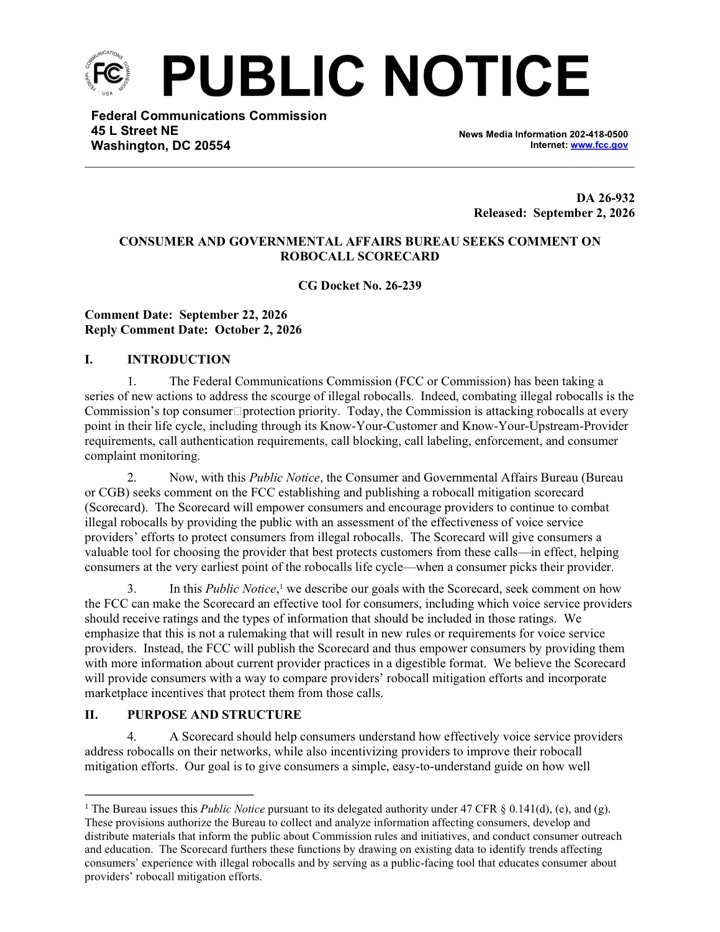
On September 2, 2026, the FCC’s Consumer and Governmental Affairs Bureau asked for comment on a Robocall Mitigation Scorecard: an “assessment of the effectiveness of voice service providers’ efforts to protect consumers from illegal robocalls.” It would be a public document on the FCC’s website, updated periodically, intended to help consumers choose “the provider that best protects customers.”
The Bureau proposes to rate only domestic voice service providers with retail customers, across wireless, wireline, and VoIP, and not providers that operate solely as wholesale or intermediate providers.
Not a rulemaking. The FCC states that this “is not a rulemaking that will result in new rules or requirements,” and that the scorecard “will not be an indication of whether providers have or have not complied” with the robocall rules. Comments closed September 22 and replies October 2, 2026.
What it would measure
The FCC describes “a composite set of metrics that reflects both operational practices and measurable outcomes, including how often legitimate calls are blocked.” Ideas under consideration include:
| Type | Possible measures |
|---|---|
| Conduct | Consumer labeling and blocking tools, network-level blocking, responses to traceback requests, and attestation of SIP calls. |
| Outcomes | Consumer complaints, illegal robocalls received, calls blocked, and the false-positive rate: legitimate calls blocked by mistake. |
| Data sources | Robocall Mitigation Database filings, FCC complaints and enforcement data, Industry Traceback Group data, FTC complaints, and third-party analytics. |
For the format, the FCC lists options ranging from risk tiers (“low risk, medium risk, high risk”) and scores (“96 out of 100”) to letter grades (“A through F”) and banded tiers. It also asks whether providers should be able to review and dispute their data before publication.
Why it matters
A public grade is a commercial risk. A scorecard on the FCC’s website would be read by customers, enterprise buyers, partners, and journalists. A provider can be marked down for letting illegal calls through and for blocking legitimate calls by mistake, so both sides of the same problem would count.
Several of the measures under discussion are the same ones regulators already enforce, such as traceback responses and authentication, as covered in our analysis of the latest Robocall Mitigation Database removals and our analysis of STIR/SHAKEN attestation.
Questions to answer now
Provider leaders should be able to answer the following with confidence:
| # | Question for your leadership team | When |
|---|---|---|
| 1 | If the FCC published our record tomorrow, which measure would hurt us most? | Now |
| 2 | Do we know our own false-positive rate: how many legitimate calls we block or label? | This quarter |
| 3 | How quickly and completely do we answer traceback requests today? | This quarter |
| 4 | Would our data stand up if we had to dispute a rating? | Before publication |
Answering these questions takes your own data, measured the way a regulator would. The VoiceAlerts Compliance Team can review where you stand in a free 30-minute briefing.
Key dates
| Date | Milestone |
|---|---|
| Sep 2, 2026 | FCC seeks comment on the Robocall Mitigation Scorecard (DA 26-932). |
| Sep 22, 2026 | Comments due. |
| Oct 2, 2026 | Reply comments due. |
| Pending | First scorecard published. |
How VoiceAlerts helps
VoiceAlerts helps providers improve the measures a scorecard would weigh: verifying customers and upstream providers, keeping STIR/SHAKEN healthy, answering traceback with evidence, and catching bad traffic without blocking good calls.
- Traceback readiness and STIR/SHAKEN health
- Customer and upstream vetting evidence
- Blocking accuracy: bad calls stopped, good calls delivered
Common questions
What is the FCC Robocall Mitigation Scorecard?
A public assessment the FCC is developing, announced in Public Notice DA 26-932 (September 2, 2026), of how effectively voice service providers protect consumers from illegal robocalls. It would be posted on the FCC's website and updated periodically.
Which providers would the scorecard rate?
The FCC proposes to rate only domestic voice service providers with retail customers, including wireless, wireline, and VoIP providers, and not providers that operate solely as wholesale or intermediate providers.
Does the scorecard create new FCC rules?
No. The FCC states it is not a rulemaking that will result in new rules or requirements, and that the scorecard will not indicate whether providers have complied with the robocall rules.
How can VoiceAlerts help providers prepare for the scorecard?
VoiceAlerts helps providers strengthen the measures under consideration: customer and upstream vetting, STIR/SHAKEN health, evidence-based traceback responses, and accurate blocking that stops bad calls without blocking legitimate ones.
Sources
This article is for general information and is not legal advice. Proposed rules can change before adoption; check the FCC record for the final text.