VoiceAlerts Insights

Voice fraud, voice security and FCC compliance, explained.

What new FCC rules, enforcement actions, and attacks on the phone channel mean for carriers, enterprises, and VAR partners, from the VoiceAlerts Compliance Team, with every source linked.

RSS feed
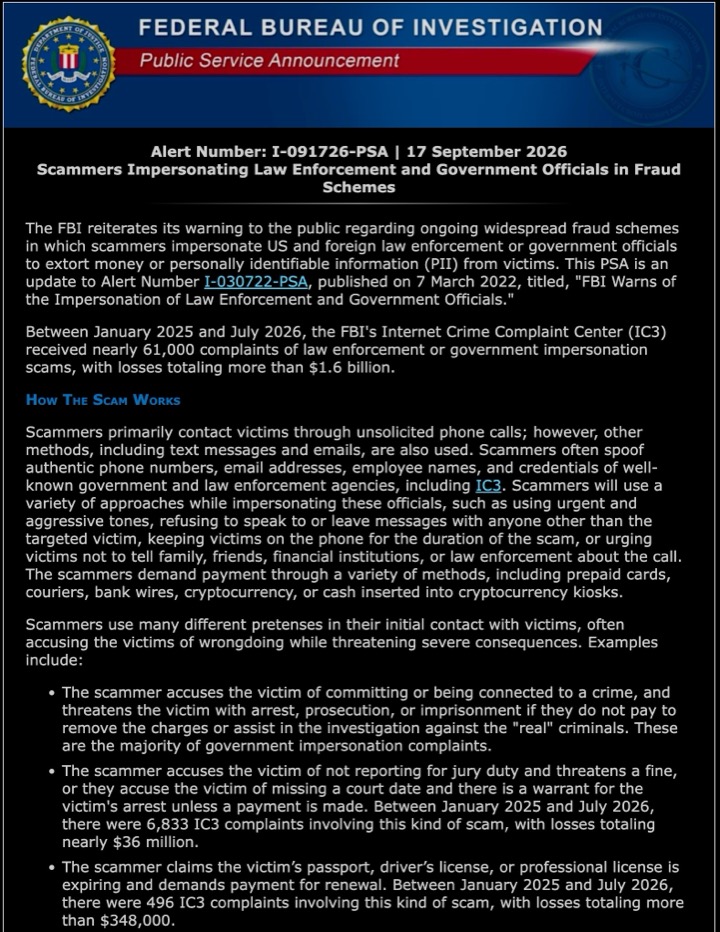
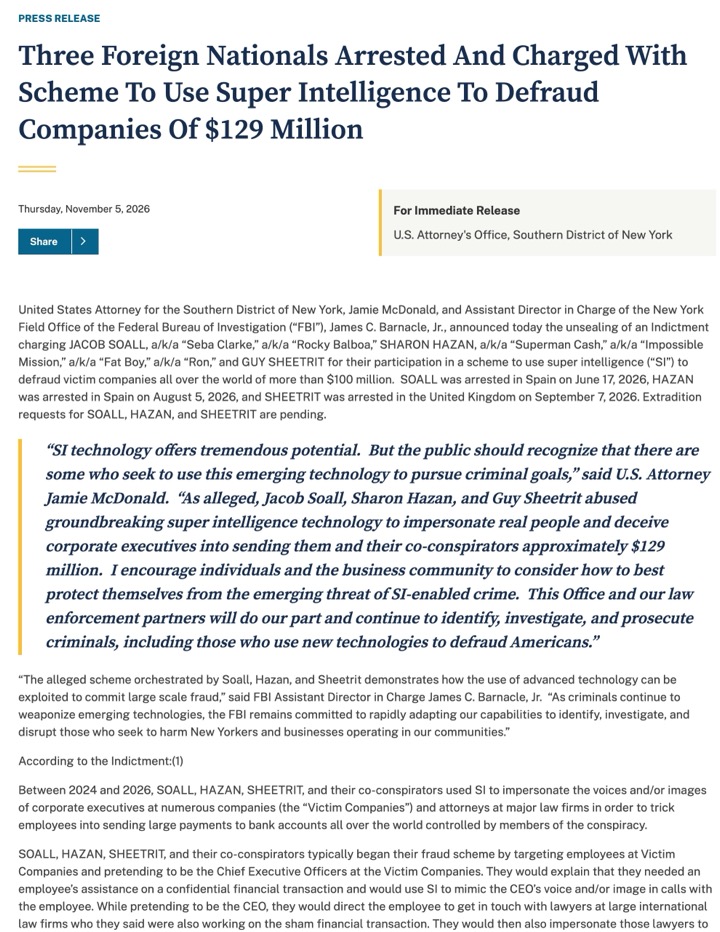
Image from the source: FBI IC3 public service announcement I-091726-PSA FBI IC3 public service announcement I-091726-PSA Reported losses$1.6BJan 2025 to Jul 2026, FBI
Voice Security

Scammers Are Calling From Government Numbers: $1.6 Billion Lost to Fake Agents, and What Agencies, Banks, and Carriers Can Do

The FBI counts 61,000 government-impersonation complaints and $1.6 billion lost in 19 months, often from spoofed agency numbers. What organizations can do.

VoiceAlerts Compliance Team Source date · 3 min read
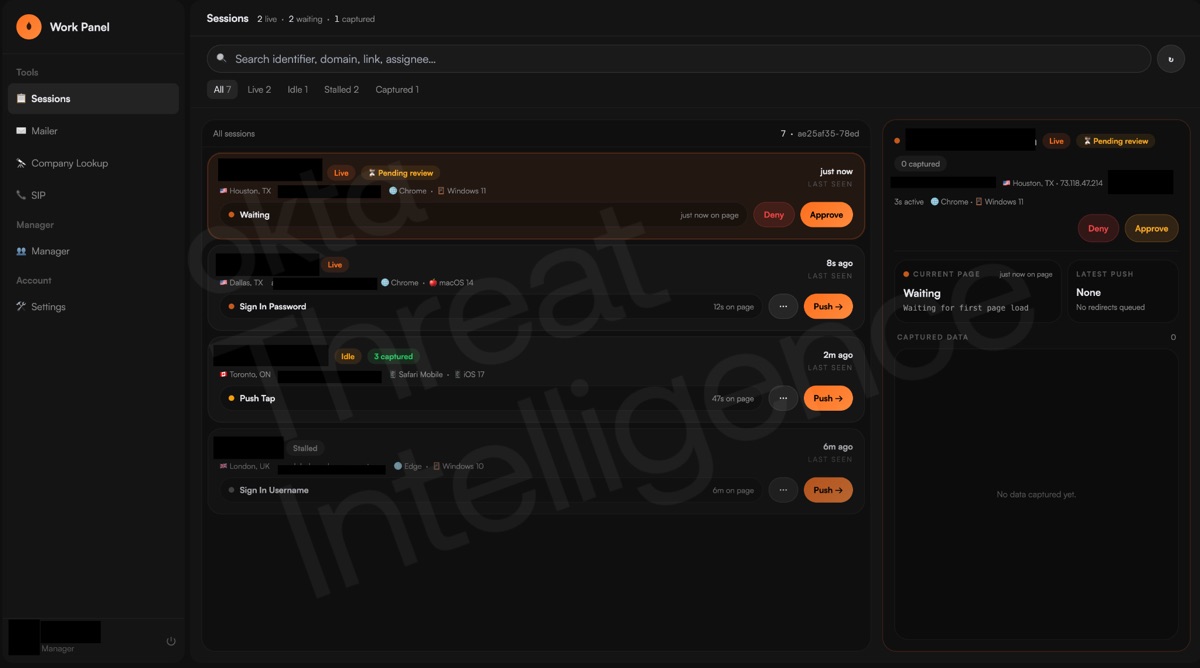
Image from the source: Okta threat intelligence Okta threat intelligence Extortion payments$10.69Mreceived by one group in 4 months
Voice Security

Helpdesk Vishing: The Phone Call Your Security Stack Never Sees

Vishing crews pose as the IT helpdesk to steal logins and MFA codes. One group received $10.69 million in four months. Why the phone call is the blind spot.

VoiceAlerts Compliance Team Source date · 3 min read
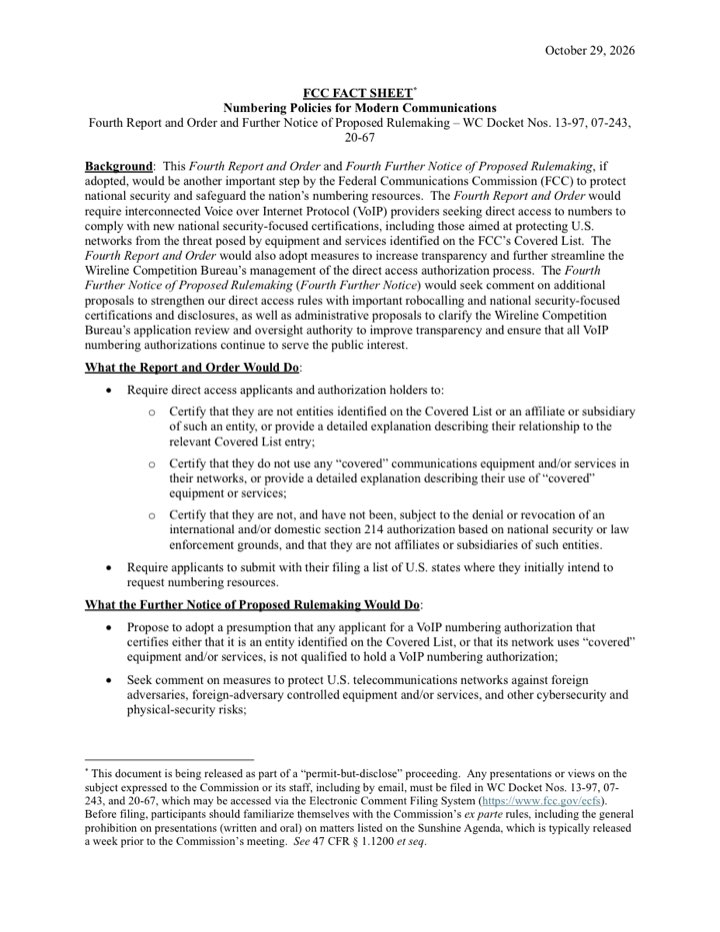
First page of the source: FCC Fact Sheet and draft order FCC Fact Sheet and draft order Fail to certifyNo new numbersand possible revocation
FCC & Regulation

The FCC's November 19 Vote on Phone Number Access: What VoIP Providers Should Prepare

The FCC votes Nov. 19 on new national-security certifications for VoIP providers with direct access to numbers. What the draft requires and how to prepare.

VoiceAlerts Compliance Team Source date · 4 min read
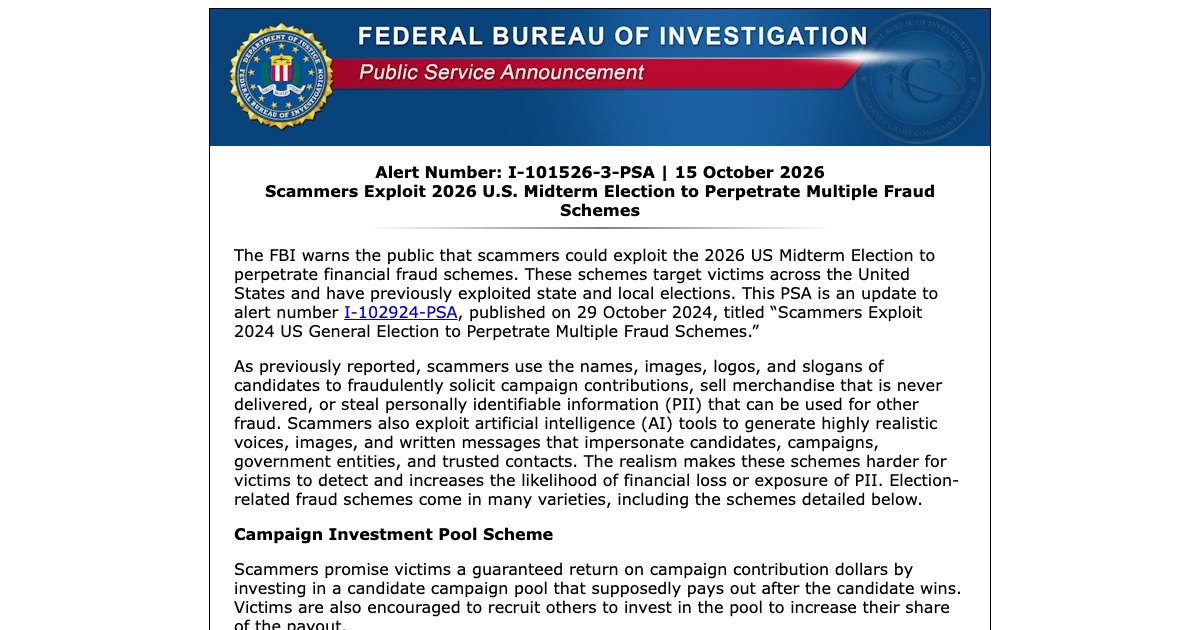
Image from the source: FBI public service announcement FBI public service announcement FBI warningAI voicesimpersonating candidates and officials
Voice Security

FBI Warns of AI Voices in Midterm Election Scams: What Carriers and Voice Providers Should Know

The FBI warns scammers use AI-generated voices to impersonate candidates and officials before the 2026 midterms. Why carriers carry the risk, and the rules.

VoiceAlerts Compliance Team Source date · 2 min read
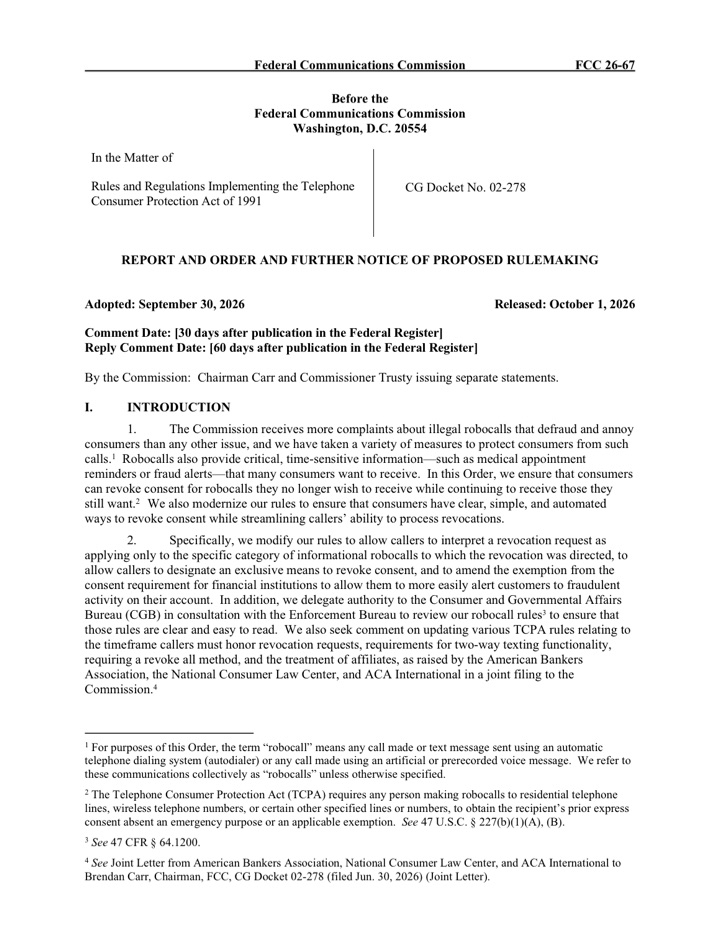
First page of the source: FCC Report and Order (FCC 26-67) FCC Report and Order (FCC 26-67) TCPA damages$500–$1,500per unlawful call or text
TCPA & Consent

New TCPA Opt-Out Rules Take Effect November 25: What Changes for Callers and Texters

New FCC opt-out rules take effect Nov. 25, 2026: narrower revocations, a designated opt-out method, and wider fraud alerts. What callers should change.

VoiceAlerts Compliance Team Source date · 4 min read
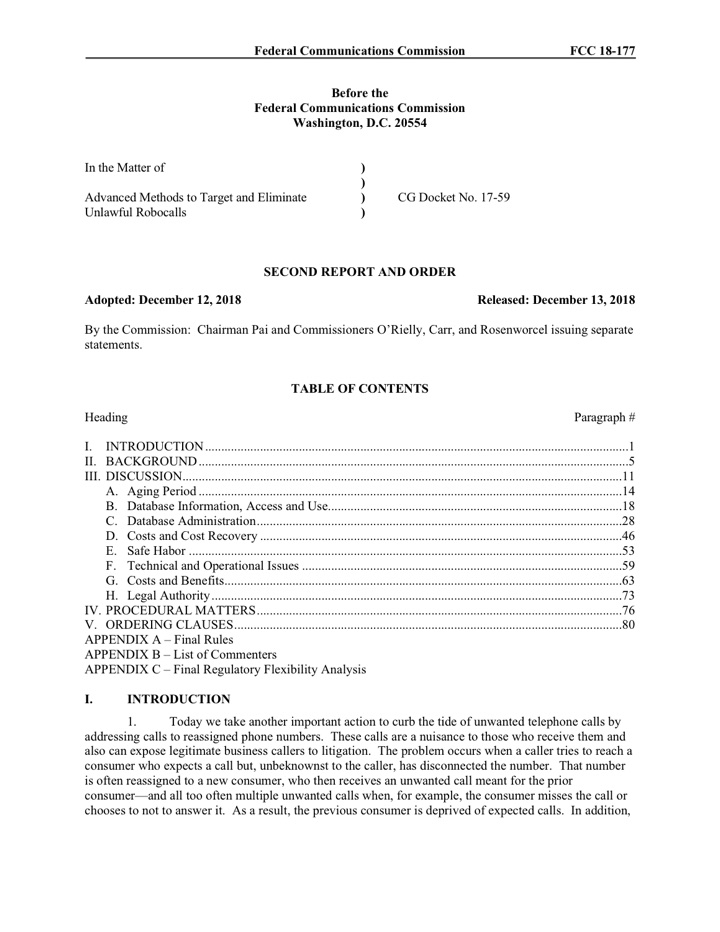
First page of the source: FCC 18-177 (Second Report and Order) FCC 18-177 (Second Report and Order) Wrong-number risk$500–$1,500per call to a reassigned number
TCPA & Consent

The Reassigned Numbers Database: How the TCPA Safe Harbor Protects Callers, and What It Requires

A reassigned number belongs to someone who never consented. How the FCC's Reassigned Numbers Database and its TCPA safe harbor work.

VoiceAlerts Compliance Team Source date · 2 min read
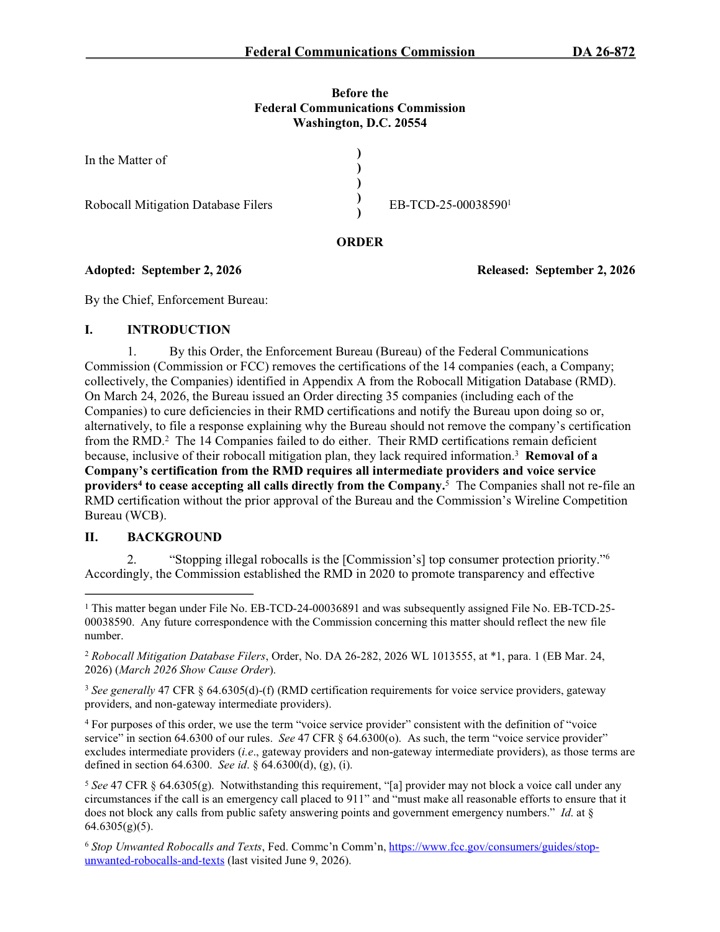
First page of the source: FCC removal order (DA 26-872) FCC removal order (DA 26-872) FCC penalty$10,000per inaccurate filing, until corrected
Robocall Mitigation

Removed From the Robocall Mitigation Database: Why 14 Providers Were Cut Off, and How to Protect Your Filing

The FCC removed 14 providers from the Robocall Mitigation Database, cutting them off from U.S. networks. Why it happened and how to protect your filing.

VoiceAlerts Compliance Team Source date · 5 min read
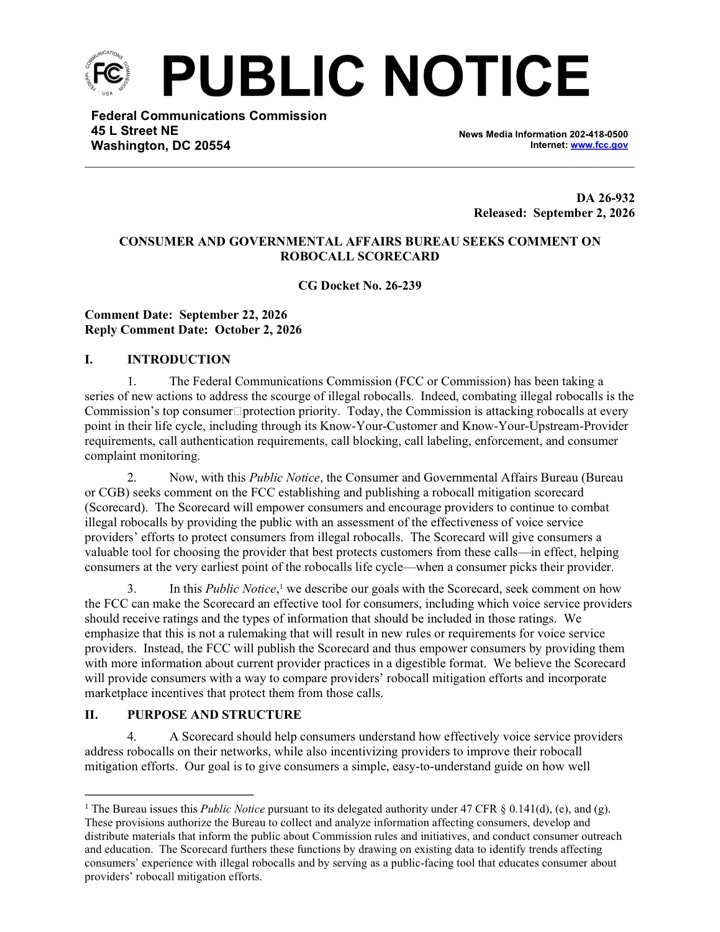
First page of the source: FCC Public Notice DA 26-932 FCC Public Notice DA 26-932 Coming to FCC.govPublic gradesfor provider robocall protection
FCC & Regulation

The FCC's Robocall Scorecard: How Voice Providers May Soon Be Graded in Public

The FCC plans a public scorecard rating voice providers on robocall protection, including how often legitimate calls are wrongly blocked. What to know.

VoiceAlerts Compliance Team Source date · 2 min read
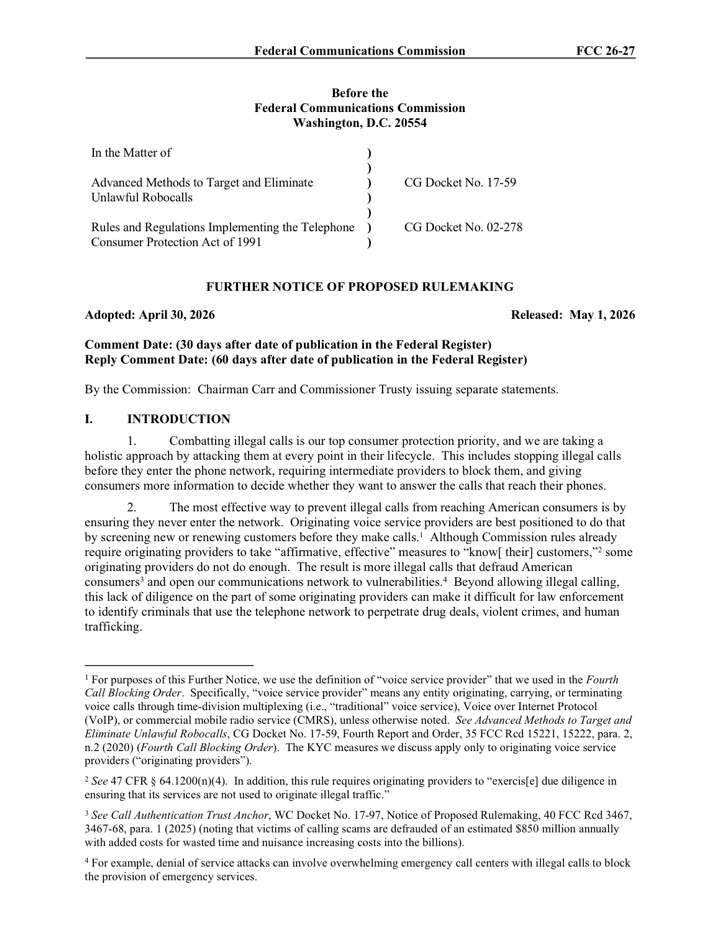
First page of the source: FCC 26-27 (Know Your Customer) FCC 26-27 (Know Your Customer) Proposed base fine$2,500per call for KYC violations
FCC & Regulation

KYC and KYUP Are Coming: What the FCC Proposes to Require of Every Voice Provider's Customers and Upstream Providers

The FCC proposes specific Know Your Customer and Know Your Upstream Provider duties, a $2,500 per call base fine, and four-year records. What providers face.

VoiceAlerts Compliance Team Source date · 3 min read
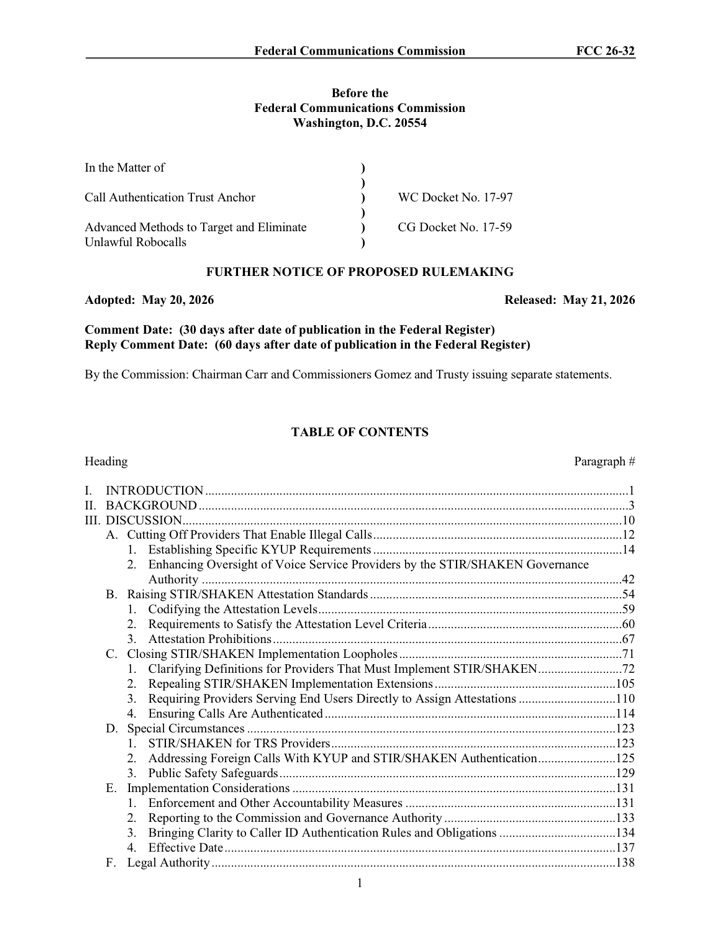
First page of the source: FCC 26-32 (KYUP and STIR/SHAKEN) FCC 26-32 (KYUP and STIR/SHAKEN) Illegal calls48%carried A-level attestation
FCC & Regulation

STIR/SHAKEN Attestation Under Scrutiny: Why the FCC Wants to Know What Stands Behind Every A-Level Call

Nearly half of illegal calls carry A-level STIR/SHAKEN attestation. The FCC proposes stricter attestation rules. What providers should know about A, B and C.

VoiceAlerts Compliance Team Source date · 3 min read
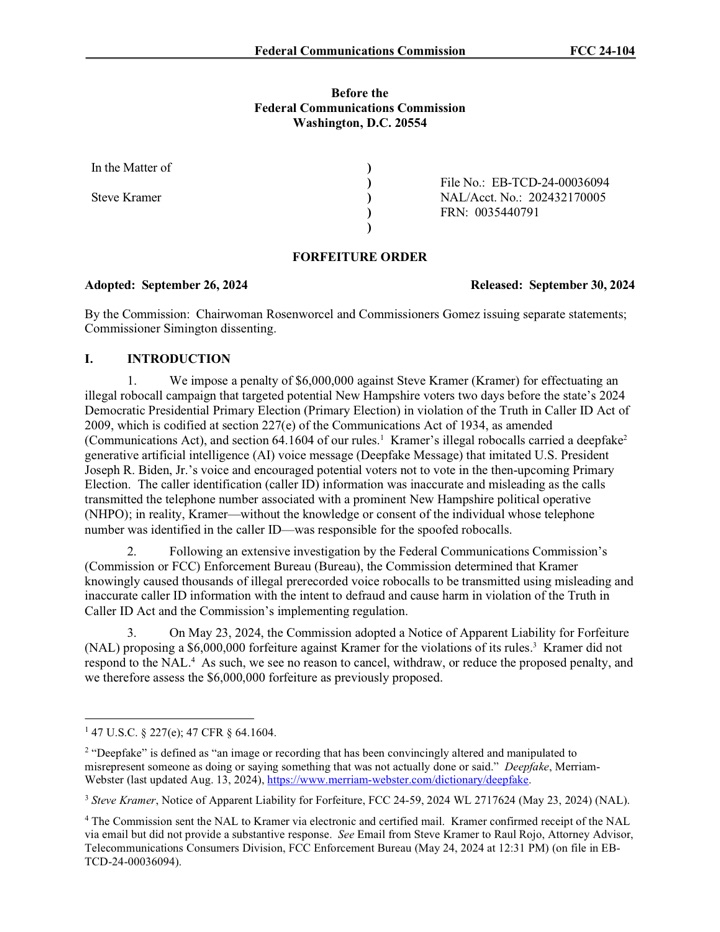
First page of the source: FCC 24-104 Forfeiture Order FCC 24-104 Forfeiture Order Spoofing forfeiture$6,000,000for spoofed AI robocalls
Voice Security

Your Number Is Being Spoofed: What It Costs Your Brand, and What U.S. Rules Let You Do About It

Scammers display real bank and brand numbers, including fraud lines printed on cards. What spoofing costs a brand, what the law says, and what you can do.

VoiceAlerts Compliance Team Source date · 3 min read
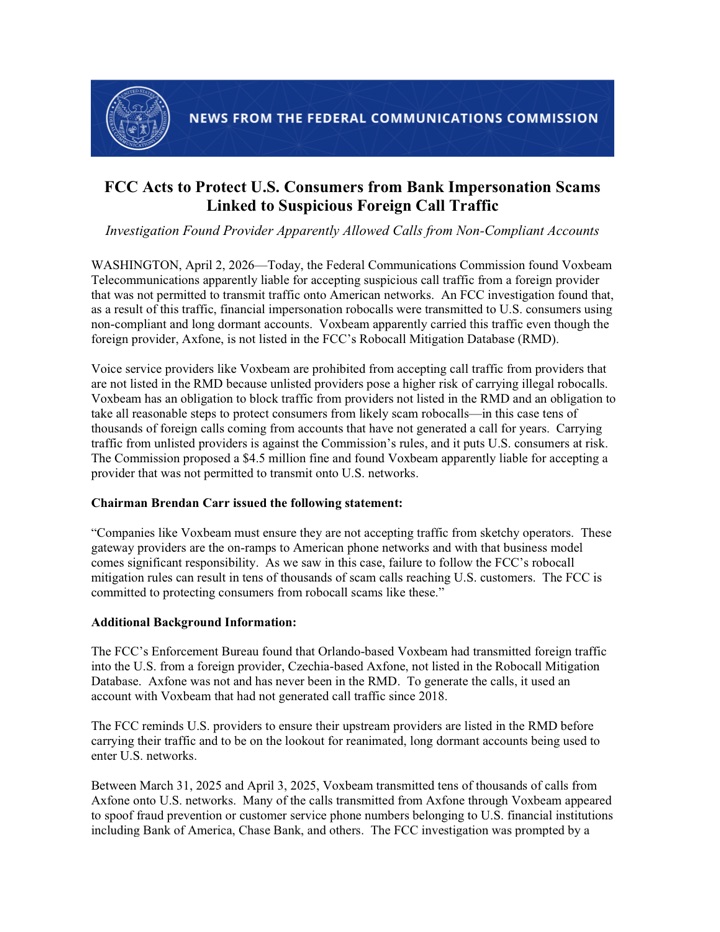
First page of the source: FCC News Release (Voxbeam) FCC News Release (Voxbeam) Proposed FCC fine$4.5 millionfor one unlisted upstream provider
FCC & Regulation

$4.5 Million for Not Knowing Who You Carry: What the FCC's Proposed Fines Against Voxbeam and Telnyx Mean for Providers

The FCC proposed $4.5 million fines against two voice providers: one for carrying an unlisted upstream provider, one for weak customer vetting. What it means.

VoiceAlerts Compliance Team Source date · 3 min read
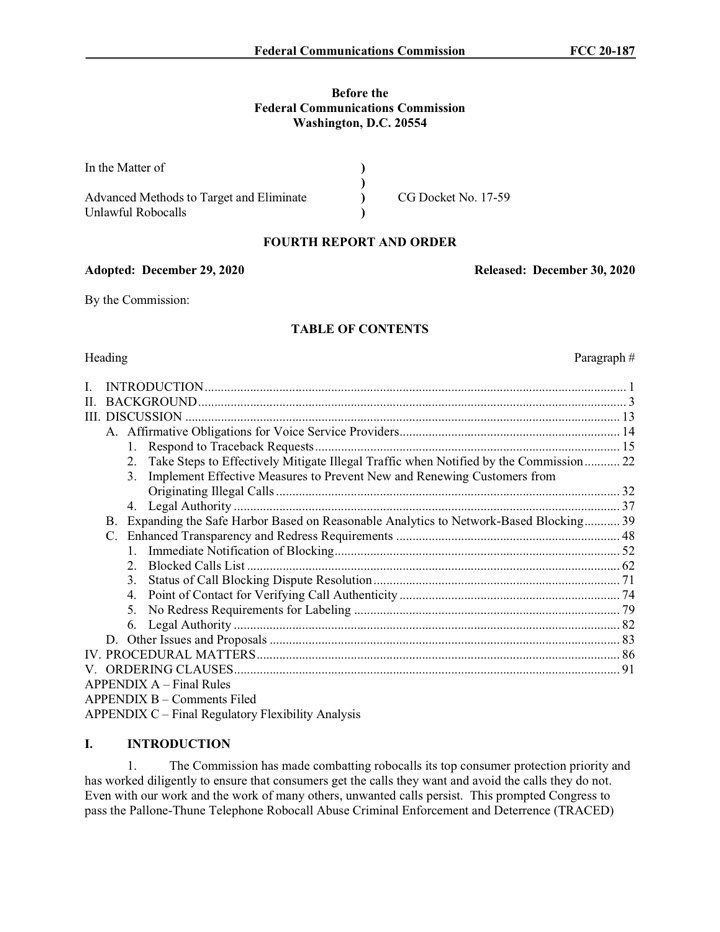
First page of the source: FCC 20-187 (Fourth Report and Order) FCC 20-187 (Fourth Report and Order) FCC redress for labelsNone todaythe rules cover blocking, not labels
Number Reputation

Why Your Legitimate Calls Say “Scam Likely,” and Why FCC Redress Rules Won’t Fix It

FCC redress rules cover blocked calls, not "Scam Likely" labels. What the rules require of providers, what they leave out, and how labels hit answer rates.

VoiceAlerts Compliance Team Source date · 2 min read